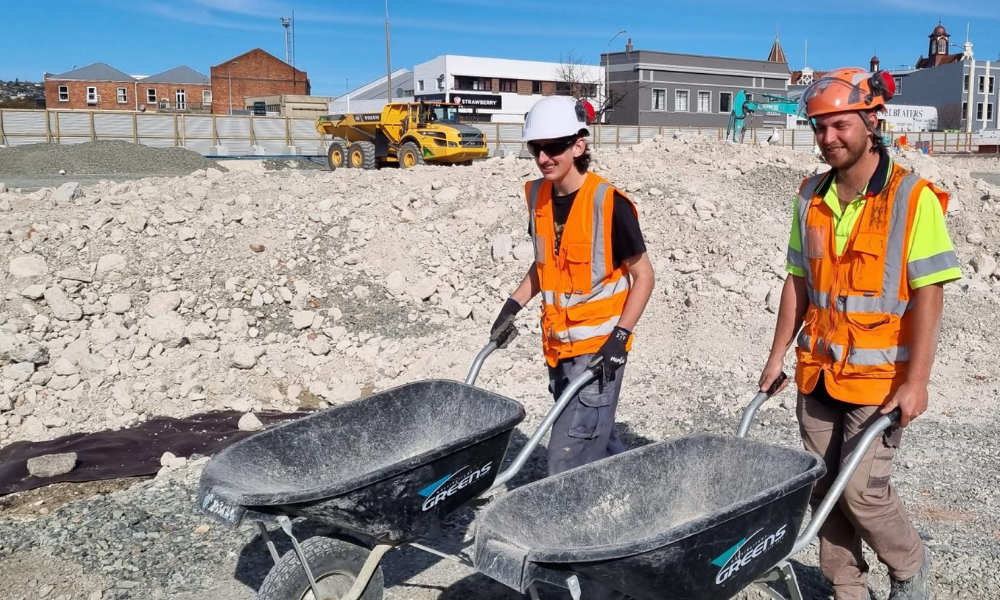
Starting your first day on a construction site in NZ can feel a bit daunting, especially if it is your first labouring job or your first assignment with a new contractor. You might be reporting to a commercial build in Auckland at 6:30am, joining a civil crew in Canterbury, or meeting a foreman on a smaller residential site.
You do not need to know everything on day one. You do need to arrive on time, listen to the site induction, understand who you report to and be ready for physical work.
If you are starting a job through us at Tradestaff, there is another important point to know before you head out and start buying gear. We provide the required PPE for your Tradestaff assignment. We also complete Health and Safety onboarding with our workers before they start.
Here is what to bring, what we provide and what you can expect from your first shift.
What Should You Expect on Your First Day on a Construction Site in NZ?
Your first day will usually involve meeting your supervisor, completing a site-specific induction and getting familiar with the workplace before starting your assigned tasks.
Exactly what that looks like depends on the site. A residential building crew may have a relatively simple site structure, with a builder or foreman directing the work. A major commercial or civil project can involve multiple contractors, controlled access points, mobile plant, exclusion zones and designated pedestrian routes.
Your site induction should explain the hazards and procedures relevant to that particular workplace. Pay attention even if you have worked on construction sites before. The rules and risks from your previous site do not automatically apply to the new one.
What Should You Bring to Your First Labouring or Trades Job?
For most labouring assignments, you do not need to arrive carrying half a workshop. Unless we have specifically told you to bring tools or equipment, concentrate on being prepared for a physical working day.
Bring:
A good-sized water bottle
Enough food for smoko and lunch
Practical clothing suitable for the work and weather
Any licences, tickets or documentation we have asked you to bring
Any personal medication you require during the day
A charged phone so you can find the site and contact us if something goes wrong
Check the weather before leaving home as well. An outdoor civil assignment in Canterbury during winter requires different preparation from an indoor commercial fit-out in Auckland.
Most importantly, check the assignment information we have given you. Know the address, start time, who you are reporting to and any specific access or parking instructions.
Does Tradestaff Supply PPE?
Yes. Tradestaff provides the required PPE you need for your assignment.
You should not assume you need to spend your own money buying a complete set of construction PPE before starting a job with us.
Before starting an assignment, our workers complete Health and Safety onboarding. We provide the PPE required for the work, which may include safety boots and other appropriate safety equipment depending on the role and site requirements.
New Zealand health and safety requirements are important here. WorkSafe guidance states that when PPE is required to manage workplace risks, the relevant PCBU must generally provide it unless another PCBU in the contracting chain has already done so.
If you are unsure about the PPE for your particular assignment, contact us before you arrive on site. We would rather sort the question beforehand than have you guessing on your first morning.
What PPE might you need on a construction site?
PPE requirements depend on the job and the hazards present. Depending on the assignment, you could be using:
Safety boots
High-visibility clothing
Hard hat
Safety glasses
Gloves
Hearing protection
Other task or site-specific protective equipment
PPE needs to be appropriate for the work and fit properly. If something is damaged, does not fit correctly or you are unsure whether it is suitable for your task, tell your supervisor or Tradestaff consultant.
Recruiter Insight: “One of the easiest first-day problems to prevent is someone arriving unsure about their PPE or where they need to report. We organise required PPE for our workers, but we still tell people to check their assignment details the night before. Knowing where you are going, who you are meeting and what time you need to be there makes the first morning much easier.”
What Happens During a Construction Site Induction?
A construction site induction introduces you to the specific hazards, rules and emergency procedures at the workplace before you start work.
This is separate from the Health and Safety onboarding you complete with Tradestaff. Our onboarding prepares you for working through us. The site induction deals with the risks and procedures at the actual workplace you have been assigned to.
Depending on the site, the induction may cover:
Emergency and evacuation procedures
First aid arrangements
Site access and restricted areas
Vehicle and mobile plant movements
Site facilities
Hazard and incident reporting
PPE requirements
Who you report to
Site-specific safety rules
Do not treat the induction as paperwork you need to get through before the real work begins. On a busy commercial or civil site, knowing where machinery operates or which area is restricted can prevent a serious incident.
Why Does Your First Day Matter?
Your first shift gives the supervisor an early indication of your reliability, attitude and site awareness.
You do not need to prove yourself by being the fastest person on the crew. In fact, rushing into unfamiliar work because you want to look experienced can create problems.
A better first impression is straightforward. Arrive when you were told to arrive. Listen. Follow instructions. Stay aware of what is happening around you. Keep your work area tidy and ask when you are unsure.
Those basics matter whether we place you into construction, civil, engineering, manufacturing, logistics or general labouring work.
What Work Might You Do on Your First Day?
For labourers and people newer to construction, your first tasks may be fairly straightforward but physically demanding.
You could be moving materials, unloading deliveries, cleaning work areas, helping with site set-up, assisting qualified tradespeople or completing general labouring duties. On civil projects, you may be working around trucks and heavy plant. On a commercial build, you could be moving materials between different floors or work areas.
Do not assume basic work is unimportant.
Keeping access ways clear, stacking materials correctly and maintaining a tidy work area all contribute to a safer and more productive site. Supervisors notice workers who handle those jobs properly without needing to be chased.
What Should You Do If You Don't Understand a Task?
Ask before you start. It is better to clarify an instruction than pretend you understand and complete the job incorrectly or unsafely.
This is particularly important when you are unfamiliar with a tool, machine, material or part of the site. Do not operate machinery or equipment you have not been trained or authorised to use.
If something about a task seems unsafe, raise it with your supervisor. Contact us as well if you need support.
A question might take 30 seconds to answer. Fixing a damaged material, unsafe situation or injury caused by guessing can take considerably longer.
A Realistic First-Day Scenario
Imagine we have placed you on a busy commercial construction project in Christchurch.
You have been told to report at 6:45am for a 7am start. Instead of pulling up at 6:59am and then trying to find the right gate, you arrive early enough to locate the entrance and meet the supervisor named in your assignment instructions.
Before you begin work, the supervisor completes the site induction. You are shown the emergency assembly point, site facilities, vehicle routes and areas you can and cannot enter.
Your first jobs involve moving building materials, keeping an access route clear and assisting one of the tradespeople.
None of that requires you to pretend you have ten years of construction experience. What matters is that you listen, follow the site's Health and Safety requirements, work steadily and check when you are unsure.
That is the sort of first day that gives a supervisor confidence in sending more work your way.
Common First-Day Mistakes on NZ Worksites
After more than 30 years working in New Zealand recruitment, we know that first-day problems are often caused by simple things rather than a lack of trade ability.
Some common problems include:
Arriving at the start time instead of being ready to work at the start time
Going to the wrong gate or entrance on a large project
Not bringing enough food or water
Being unprepared for outdoor weather
Spending unnecessary time on your phone
Pretending to understand instructions
Ignoring a rule because your previous site did things differently
Not reporting damaged or poorly fitting PPE
Using equipment you have not been authorised or trained to operate
Leaving the site without telling the appropriate person
Reliability matters particularly when you are working as a temp or contractor. A supervisor may only have worked with you for a few hours, so turning up when expected and following instructions are some of the quickest ways to establish trust.
If something genuinely goes wrong on your way to work, communicate. Call us as soon as possible rather than leaving the site supervisor wondering where you are.
How Do You Make a Good Impression on Your First Shift?
Be reliable, alert and useful. Those three things go a long way on a New Zealand worksite.
When you finish a task, ask what needs doing next. If you see a potential hazard, raise it appropriately. If a supervisor corrects something you are doing, listen and adjust.
One recurring mistake is trying too hard to demonstrate experience. Someone might have worked on residential builds for years, then arrive on a major commercial project and assume the systems will be the same. They often are not.
Different contractors have different procedures, and residential, commercial and civil sites can operate very differently.
Working through Tradestaff can give you exposure to different contractors, crews and projects across New Zealand. Treat each new site as a new workplace, even when you already know the trade.
First Day on a Construction Site NZ FAQs
Does Tradestaff provide PPE?
Yes. Tradestaff provides the required PPE for your assignment. We also complete Health and Safety onboarding with workers before they start. PPE requirements vary by role and site, so check with your Tradestaff consultant if you are unsure about anything before your first shift.
What should I bring to my first labouring job?
Bring water, enough food for the shift, practical clothing, any requested licences or tickets and a charged phone. Check your assignment instructions before leaving home. Tradestaff provides the required PPE for your assignment.
Should I bring my own tools?
Only if we have told you to. Tool requirements vary between trades, contractors and assignments. Check your job instructions or ask your Tradestaff consultant rather than assuming you need to bring tools.
How early should I arrive at a construction site?
Arrive early enough to park, locate the correct entrance and report to your supervisor before your scheduled start. Large commercial and civil projects can take longer to access than smaller residential sites, particularly on your first visit.
What should I do if I feel unsafe at work?
Stop and raise the concern with your supervisor. If you need further support, contact Tradestaff. Serious Health and Safety concerns should not be ignored, and workers have rights under New Zealand's workplace Health and Safety system.
Ready for Your First Trades or Labouring Job?
Your first day on a construction site in NZ does not need to be complicated. Check your assignment details, arrive early, bring food and water, listen carefully during the site induction and ask questions rather than guessing.
If you are working through Tradestaff, we provide the required PPE for your assignment, complete Health and Safety onboarding and remain available during your placement. With more than 30 years in New Zealand recruitment and teams working across regions including Auckland, Waikato, Wellington and Canterbury, we understand that getting the right worker onto the right site starts before the first shift.
Looking for your next opportunity? View our current Tradestaff jobs across New Zealand and find a role that matches your skills, experience and location.